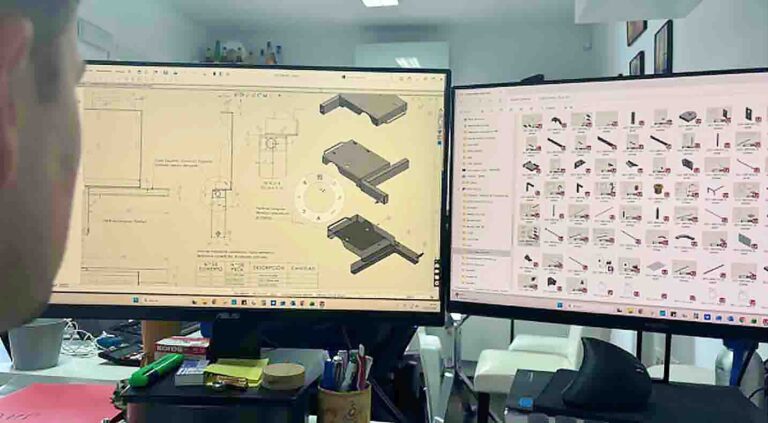
In the geological industries, innovation is no longer simply a driver of growth. For specialized companies, it is a responsibility. Faced with the increasing diversity of projects — mining, oil & gas, geotechnical, marine sediments, and carbon capture and storage (CCS) — it has become essential to continuously adapt and move beyond traditional approaches.
For a company like Geofactory, the challenge goes beyond designing high-performance equipment. It involves understanding diverse environments, addressing specific technical challenges, and integrating into increasingly demanding international projects. This ability to remain open and adaptable is what defines innovation today.
Opening to new markets to stay relevant
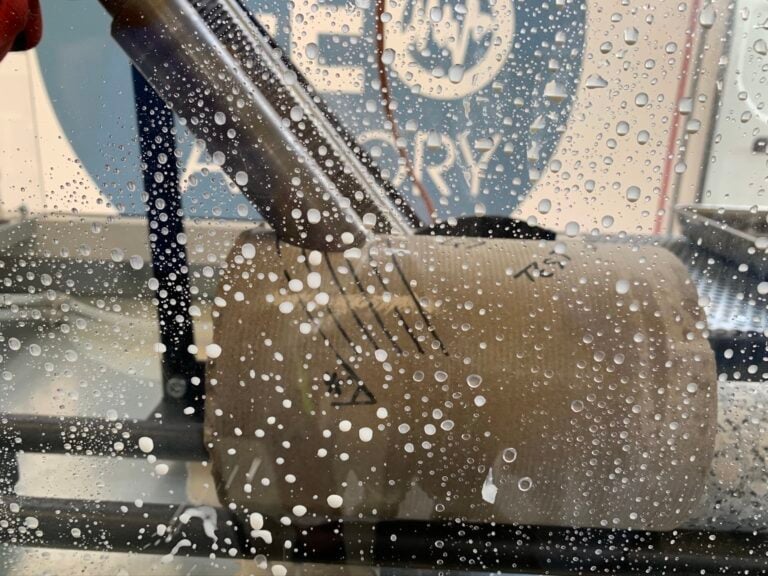
Geological sampling is evolving rapidly. Methods and technologies are no longer confined to a single sector. Techniques originally developed for oilfield coring are now applied in CCS and geothermal projects. Mining requirements, particularly in terms of productivity and equipment robustness, are influencing certain geotechnical applications. Marine sediments, on the other hand, introduce specific constraints related to their low cohesion and the need to preserve their in-situ condition.
In this context, innovation means expanding the scope of activity.
This includes:
- Working with a wide range of sample types
- Adapting equipment to different environments
- Meeting sector-specific expectations
- Integrating into complex international projects
Each new market brings its own requirements and challenges existing solutions.
Innovation driven by field constraints
Every sampling project is unique. Rock type, degree of fracturing, presence of fluids, and site accessibility directly influence the methods to be implemented.
In this context, innovation is not theoretical. It is driven by real field conditions.
International projects expose teams to very practical challenges:
- Unstable or fragmented core samples
- Sensitive samples requiring specific preservation methods
- Abrasive materials accelerating tool wear
- Difficult or remote operating conditions
- The need to process large volumes within short timeframes
These constraints require continuous adaptation of both equipment and procedures. They drive improvements in precision, safety, and operational reliability.
This field-driven reality is what fuels innovation on a daily basis.
Industrial design as a performance driver
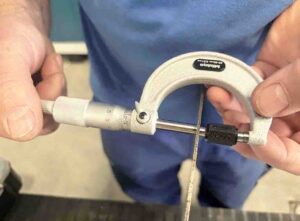
At the core of this approach is Geofactory’s design department. Industrial design is a key factor in developing efficient, reliable, and user-oriented solutions.
Each machine is designed to meet concrete requirements:
- Ensuring operator safety
- Guaranteeing cutting stability and precision
- Facilitating operation and maintenance
- Integrating protection and control systems
Design is not developed in isolation. It is based on field feedback, testing phases, and a detailed understanding of operational constraints.
This approach results in equipment that is consistent, robust, and adapted to demanding working conditions.
Global solutions integrating constraints and standards
Transforming a specific need into a scalable solution is a central aspect of innovation. In an international context, this goes beyond technical performance.
Each project operates within a defined framework, including:
- Geological constraints
- Specific logistical conditions
- Site-specific operational requirements
- Applicable standards and regulations
These requirements may relate to equipment safety, operating procedures, sample handling, as well as electrical and environmental compliance. They vary depending on countries, industries, and project types.
Integrating these standards from the design phase is essential. It ensures equipment compliance while facilitating integration into the client’s operational environment.
This ability to adapt to international standards is now essential for working on complex, multi-stakeholder projects.
Continuous innovation driven by technical challenges
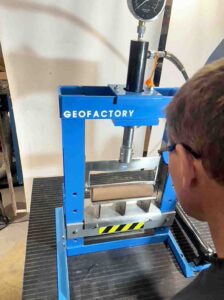
For a specialized company, innovation is not a one-time effort. It is a continuous process, driven by the diversity of projects and the complexity of the challenges encountered.
In geological sampling, this means:
- Addressing non-standard challenges
- Operating in demanding technical environments
- Collaborating with international teams
- Continuously improving existing solutions
Each project becomes a source of learning. Because beyond the machines, innovation relies on a deep understanding of real needs, adaptability, and a constant drive to improve.In a field where every sample represents critical data, this level of commitment is what ensures the precision, reliability, and relevance of the solutions developed.