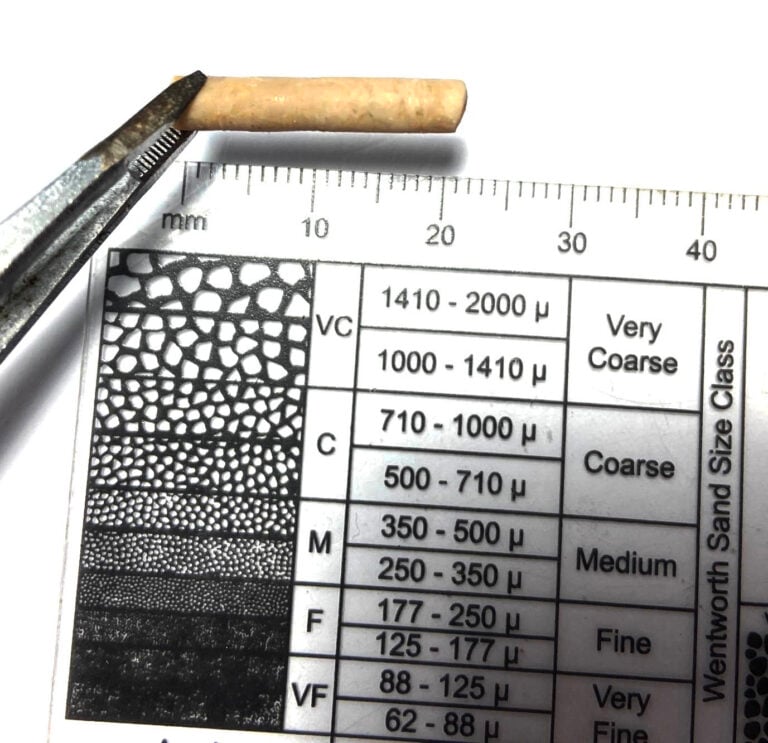
Core plug sampling for petrophysical analysis, RCAL, SCAL and NMR
In the Oil & Gas industry, geological core samples provide essential information about reservoir rocks. Once a whole core has been recovered from the reservoir formation, smaller cylindrical samples, commonly known as core plugs, can be extracted for laboratory testing and petrophysical analysis. This core sampling and rock sample preparation stage connects the recovered reservoir core with the measurements performed in the laboratory.
In petrophysical laboratories, 1-inch and 1.5-inch core plugs are commonly used for Routine Core Analysis (RCAL) and Special Core Analysis (SCAL) to investigate properties such as porosity, permeability, grain density, fluid saturation and rock-fluid behaviour.
Nuclear Magnetic Resonance (NMR) can require a very different sample scale. Depending on the laboratory equipment and analytical objective, small-diameter core samples and micro-plugs below 10 mm can be prepared. For these micro-samples, a diameter-to-length ratio of approximately 1:2 is generally targeted. A 4 mm diameter sample, for example, would typically have a length of approximately 8 mm.
Core plug orientation is another important part of the sampling strategy. Samples can be extracted parallel or perpendicular to the bedding, allowing laboratories to investigate directional variations in permeability and the influence of rock anisotropy.
At larger dimensions, samples around 2 inches in diameter are commonly encountered for rock mechanics and geomechanical testing, where the focus shifts towards properties such as strength, deformation and mechanical behaviour.
From NMR micro-plugs to larger rock mechanics specimens, sample diameter, length and orientation must ultimately be selected according to the analysis to be performed.
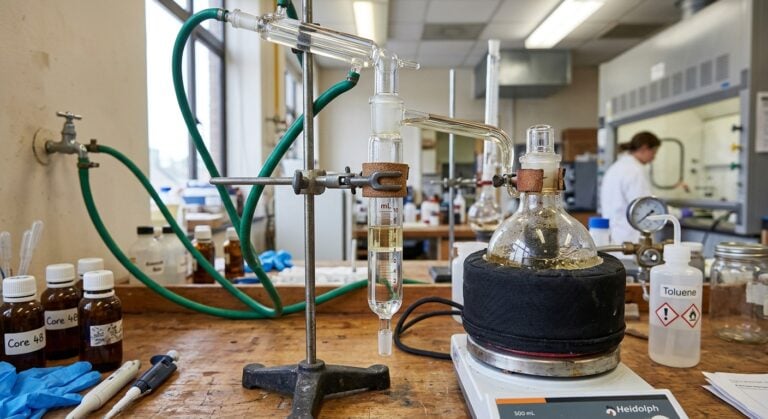
Water, brine, mineral oil, air and nitrogen in core plugging and geological sampling
During core drilling and core plugging, diamond tooling generates friction and heat while removing material from the rock. A liquid or gas can be used to cool the diamond core drill bit, evacuate rock particles and maintain appropriate drilling conditions.
However, in petrophysical sample preparation, the choice of medium goes far beyond cooling the tool. A fluid used during sampling can enter the pore network, potentially contaminating or altering the sample. It can also interact with minerals and fluids already present within the reservoir rock. The selected coring medium must therefore be considered in relation to both the formation and the subsequent analysis.
Water can be used for many conventional geological sampling operations, but it is not appropriate for every formation or analytical objective, particularly with sensitive formations such as salt or shale. Fresh water can interact with the rock and potentially modify properties that the laboratory intends to investigate.
This is particularly important when evaluating water saturation. Introducing additional water during core plugging can modify fluid distribution within the pore network, potentially affecting the representativeness of the sample and the interpretation of its original saturation conditions.
When interaction with fresh water needs to be controlled, brine can be used instead, with its composition adapted to the reservoir rock and analytical requirements. In other situations, mineral oil may be considered when a water-based fluid is undesirable.
When liquids need to be avoided, compressed air can be considered in specifically designed dry core plugging configurations. For very unconsolidated or soft formations, nitrogen can also be used as part of an adapted sampling method where preserving the structure and sample integrity of the reservoir material is particularly challenging.
Most importantly, the sampling and drilling medium should be clearly defined as part of the RCAL/SCAL program before core plug preparation begins. The choice between water, brine, mineral oil, compressed air or nitrogen should consider the reservoir formation, degree of consolidation, original fluids, sample preservation requirements and subsequent petrophysical measurements.
There is no universal coring medium for every reservoir rock. Sample integrity, contamination, fluid-rock interaction and preservation of the original saturation conditions must be considered throughout the core preparation workflow.
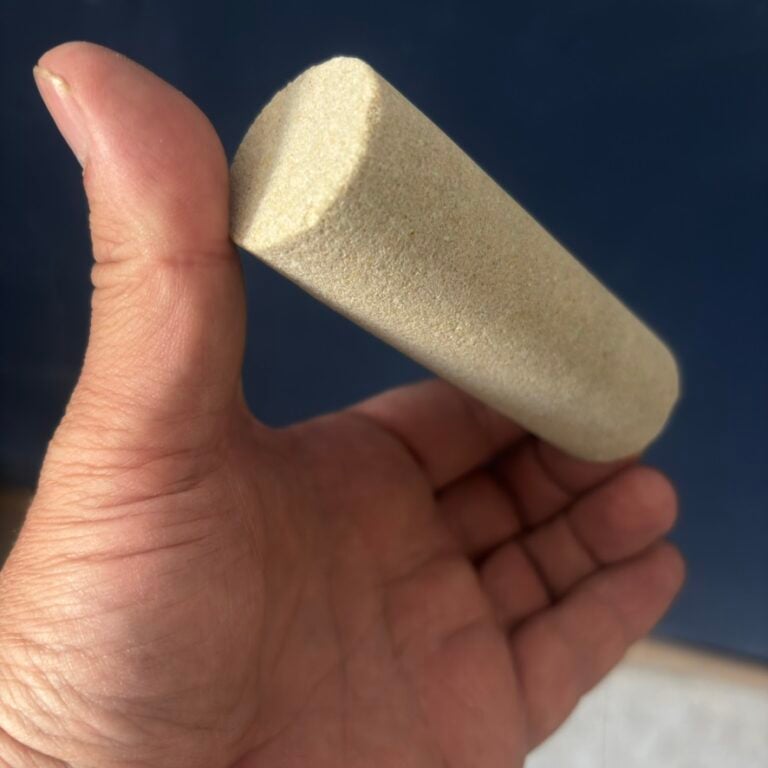
From NMR micro-plugs to 2-Inch samples different samples require specific equipment
Preparing samples for petrophysical analysis, NMR, rock mechanics and geomechanics involves very different dimensions and therefore different equipment requirements. Moving from an NMR micro-plug below 10 mm to a conventional 1-inch or 1.5-inch petrophysical core plug, and then to a 2-inch rock mechanics sample, changes the required core plugging machine, diamond tooling, rotational speed and sample holding system.
For conventional core plugging, rotational speeds in the range of approximately 1,800 to 3,300 rpm can be suitable for many applications. These speeds are compatible with the larger diamond core drill bits typically used to prepare standard petrophysical plugs.
For micro-plug sampling, the requirements are very different. Rotational speeds can increase significantly, typically reaching approximately 6,000 to 15,000 rpm. This is principally related to the much smaller diameter and reduced wall thickness of the diamond core drill bits used for micro-sampling. As tool diameter decreases, the relationship between rotational speed, cutting conditions and tooling geometry becomes increasingly important.
Simply installing a smaller diamond drill bit on a conventional plugging machine is therefore not necessarily sufficient. Spindle speed, stability, tool concentricity, feed control and sample holding must all be considered when preparing small-diameter geological samples.
Another important requirement is the ability to perform oriented core plugging. Depending on the RCAL/SCAL program, samples may need to be extracted parallel or perpendicular to the bedding, or according to another specific geological orientation. The plugging equipment therefore requires a stable and flexible positioning system capable of securely holding and orienting the original core during drilling. This is particularly important when studying rock anisotropy, directional permeability or geomechanical behaviour.
The geological formation itself also influences the configuration. Consolidated sandstone, laminated shale, salt and unconsolidated or soft formations behave differently during drilling and may require different tooling, drilling parameters and coring media.
For 2-inch rock mechanics samples, the larger diameter introduces greater drilling forces and different sample-holding requirements. Geometry and subsequent end-face preparation also become particularly important for mechanical testing.
There is therefore no universal core plugging machine for every Oil & Gas core sample. The RPM range, spindle, diamond core drill bit diameter and wall thickness, sample holder, oriented plugging capability, feed control and coring medium must all be selected according to the reservoir formation, sample dimensions and final analytical objective.
This is why Geofactory develops specific core sampling, core plugging and rock sample preparation equipment for different laboratory requirements. From NMR micro-plugs below 10 mm, through 1-inch and 1.5-inch petrophysical core plugs, to 2-inch rock mechanics samples, the equipment must be designed around the sample the laboratory ultimately needs to analyze. Reliable core analysis begins before the sample reaches the analytical instrument. It begins with how the reservoir core is selected, sampled and prepared, and with a clear understanding of the RCAL/SCAL program that follows. YouTube channel