Choosing the right stainless steel is only the beginning
In the manufacturing of geological sampling, core drilling, core cutting and rock sample preparation equipment, material selection plays an essential role in the quality and service life of a machine. At Geofactory, we have progressively moved towards stainless steel for a large part of our equipment, including our Rock Saws, core drilling and core sampling machines, and other solutions designed for geological sample preparation.
These machines operate in demanding environments. Water, drilling fluids, slurry, mineral dust, rock fragments and frequent cleaning are part of everyday operation in Mining, Oil & Gas, Geothermal, CCS, geological research and laboratory applications.
Marine Research introduces another level of exposure. Equipment used for marine sediment sampling and sediment core processing may operate in environments where saltwater and chlorides create particularly challenging conditions for metallic components.
For this reason, not every application requires exactly the same stainless steel grade. Stainless steel 304 provides an excellent combination of corrosion resistance, durability and ease of maintenance for many geological applications. For equipment exposed to marine environments, stainless steel 316 may be preferred. Its molybdenum content provides improved resistance to localized corrosion in chloride-containing environments.
Choosing between stainless steel 304 and 316 is therefore an engineering decision based on how and where the equipment will actually be used.
But selecting the right material is only the beginning.
Between a stainless steel sheet and a completed piece of geological sampling equipment, there are many manufacturing operations: cutting, bending, fitting, welding, finishing and final assembly. Each of these steps influences the quality of the finished machine.
Good raw material alone cannot guarantee a good machine. Behind modern design software and manufacturing technologies, human know-how remains essential.
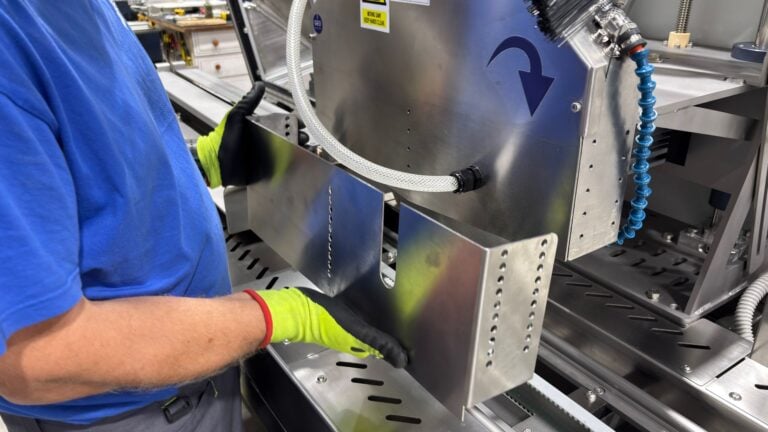
Welding: Where human know-how becomes visible
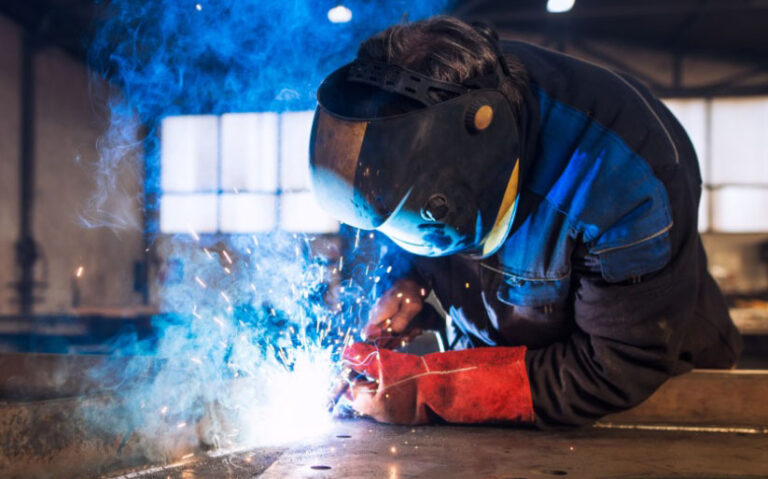
Stainless steel welding is probably one of the clearest examples of how human know-how directly influences manufacturing quality.
Properly welding two stainless steel components involves much more than simply joining them together. Surface preparation, component fitting, heat control, weld consistency, distortion management and finishing all contribute to the final result.
This becomes particularly important when stainless steel has been specifically selected for its corrosion resistance and long-term durability. The material must be processed with the same level of attention that was applied when selecting it in the first place.
In Marine Research applications, this becomes even more relevant. Selecting stainless steel 316 is an important part of designing equipment for a marine environment, but material selection alone is not enough. Preparation, welding and finishing quality also contribute to the long-term behaviour of equipment regularly exposed to saline conditions and chlorides.
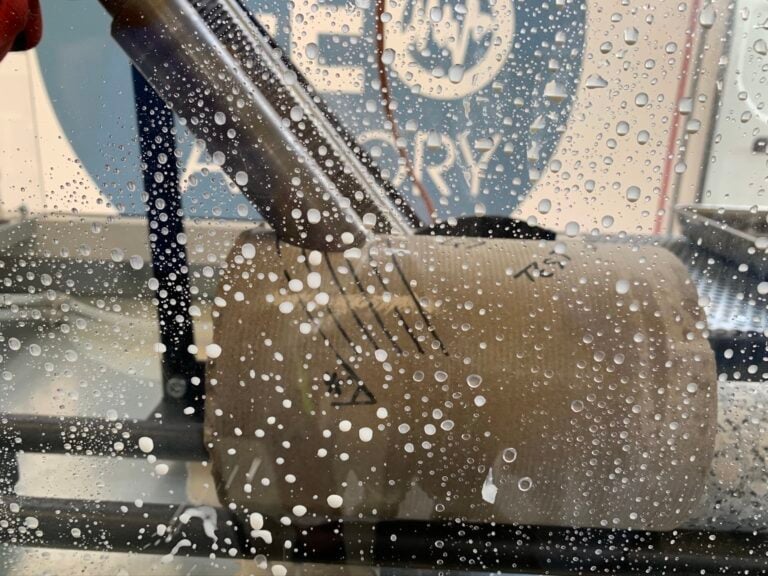
Operating conditions also vary according to the type of geological equipment. On a Rock Saw, cutting water continuously mixes with mineral fines and residues generated by the diamond blade during core cutting. On core drilling and core sampling equipment, the machine may be exposed to water, drilling fluids, rock particles and residues generated during sample extraction.
In both cases, the quality of the welds and assemblies contributes not only to structural strength, but also to cleaning, maintenance, corrosion resistance and overall equipment durability.
A weld can also reveal something that cannot easily be described on a technical datasheet: the experience of the person who made it.
At Geofactory, our equipment is not manufactured on a continuous production line. Each machine is individually prepared, welded, assembled and finished by technicians. Human workmanship therefore remains present throughout the manufacturing process.
Two machines of the same model will meet the same functional specifications, critical dimensions and quality requirements. Yet, when looking closely, small differences may sometimes be visible in a weld, a finish or an assembly detail.
These variations are a natural part of individual manufacturing. They reflect a simple reality: each machine is built by people rather than anonymously reproduced on a fully automated production line.
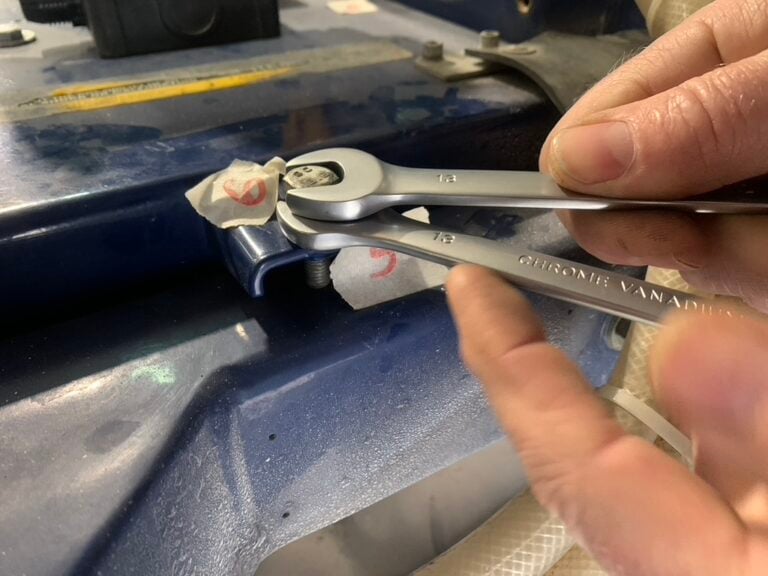
Every machine has its own manufacturing story
Geofactory designs and manufactures specialized equipment for geological sampling, core drilling, core cutting and rock sample preparation. From Rock Saws to machines designed to extract geological core samples, the technical requirements can vary considerably from one application to another.
We do not manufacture thousands of identical machines every day. Our equipment is produced in limited series and, for many projects, adapted to the customer’s specific application.
Core diameter, rock type, electrical supply, working environment and operating procedures can all require specific adaptations. A machine designed for a petrophysical laboratory does not necessarily face the same constraints as core sampling equipment operating in the field or a system developed for Marine Research.
This diversity is precisely one of the reasons why our manufacturing process retains such a strong human component.
Every machine has its own journey through our workshop. Parts are prepared, fitted, welded, assembled, inspected and finally tested. Engineering drawings, functional dimensions, expected performance and safety requirements remain defined and controlled, but transforming those specifications into a complete machine still depends heavily on the people building it.
An experienced welder does more than follow a technical drawing. They observe how the material behaves, control heat input, anticipate distortion and adapt their work to the actual geometry of each assembly. The same human experience is present during fitting, finishing, mechanical assembly and final inspection.
For Geofactory, manufacturing quality does not mean making every machine appear visually identical to the one before it. It means ensuring that every piece of equipment has been individually manufactured, assembled, inspected and tested to perform the job for which it was designed.
Technology gives us the tools to design better equipment. Stainless steel 304 and 316 allow us to select materials suited to applications ranging from Mining and Oil & Gas to Geothermal, CCS, laboratories and Marine Research. But whether a machine is cutting a geological core with a Rock Saw or extracting a sample through core drilling and core sampling, there is still one essential element between the engineer’s design and the equipment ready to work in the field: the human know-how that transforms a design into a real machine. YouTube channel