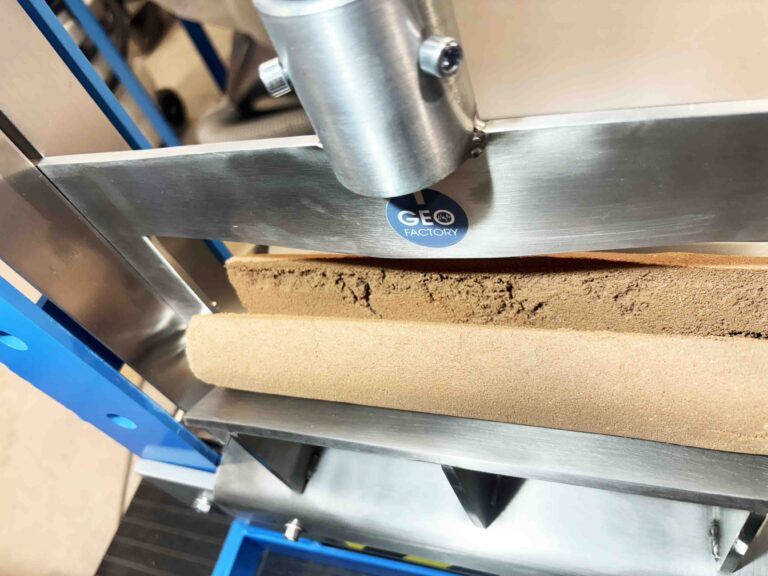
Why do Some geological formations require dry cutting?
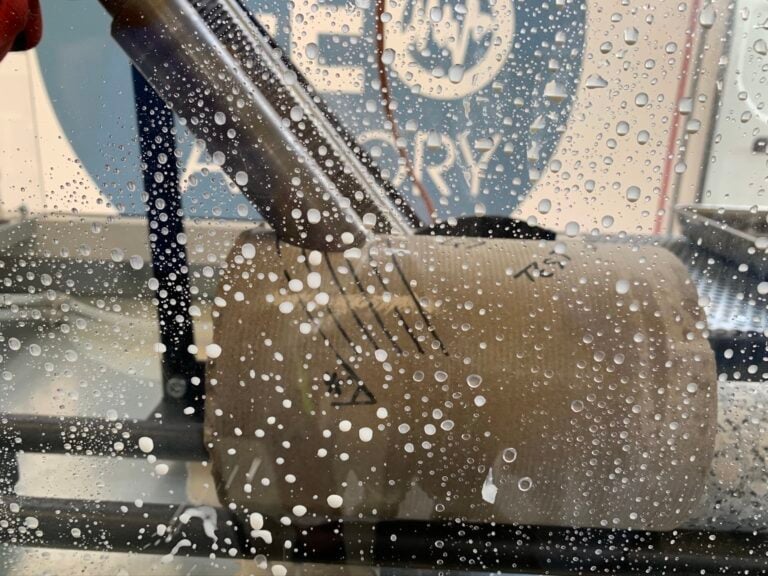
In most geological sampling and rock sample preparation operations, the use of fluids is an integral part of the core cutting process. Depending on the application and laboratory requirements, cutting systems may use water, brine water, or specially selected mineral oils.
These fluids serve several essential functions. They help cool the diamond blade, remove cutting debris, and extend tool life. For decades, fluid-assisted cutting has been the standard method used in petrophysical laboratories and geological sampling operations worldwide.
However, certain geological formations, logistical constraints, and analytical programs require a completely different approach from conventional core cutting methods.
Halite is probably the most representative example. This rock, composed primarily of sodium chloride, is extremely sensitive to water. A conventional wet-cutting operation can partially dissolve the sample and immediately alter important geological characteristics.
In petrophysical laboratories, certain RCAL, SCAL, NMR, tomography, and water saturation analysis workflows require preserving the rock in its original condition as much as possible. Introducing an external fluid during core cutting or rock sample preparation can modify fluid distribution within the pore network, affect saturation measurements, alter petrophysical properties, and compromise the representativeness of the results obtained.
The mining industry also faces similar challenges. In some gold exploration programs, geologists seek to minimize any loss of material during sample preparation. Fine particles generated during cutting may contain valuable mineralization, and the use of water can sometimes complicate their recovery and subsequent analysis.
Logistical constraints can also play a major role. In extremely arid regions where water availability is limited or expensive, geological sampling operations must be adapted to reduce resource consumption while maintaining a high level of sample quality.
In all these situations, dry cutting often becomes the only viable solution for preserving sample integrity while ensuring the quality of subsequent laboratory analyses.
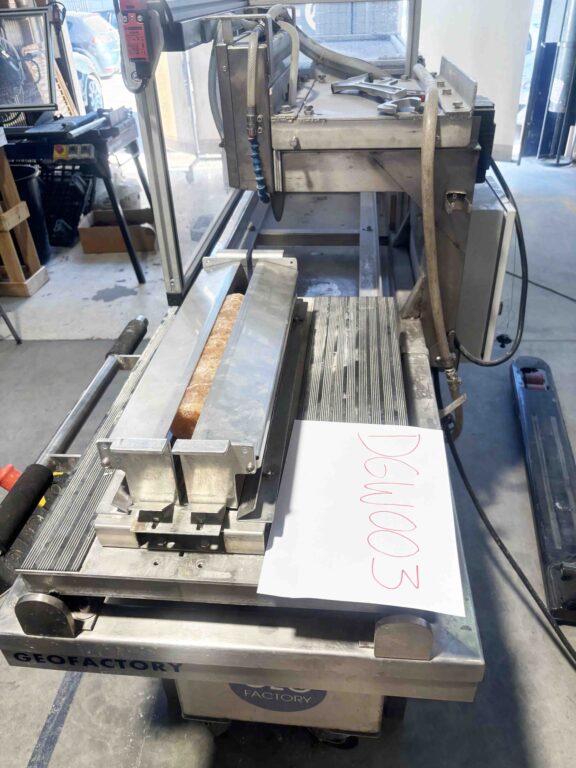
Geofactory solutions for halite and fluid-Sensitive formations
To address these specific challenges, Geofactory has developed several solutions dedicated to dry cutting operations and the preparation of fluid-sensitive samples.
The Slabbing Saw 500 is currently one of the most efficient solutions for this type of application. Originally developed for petrophysical laboratories and advanced rock sample preparation programs, it enables precise longitudinal cutting of large-diameter cores while maintaining excellent operational control.
Projects involving halite, anhydrite, or polyhalite cores require particular attention. Beyond the dissolution risks associated with evaporite formations, these rocks possess specific mechanical properties that directly influence blade behavior during cutting operations. Controlling temperature, vibration, and mechanical stress becomes critical in order to preserve sample integrity and avoid any alteration that could affect subsequent analyses.
Dry cutting operations also introduce another significant challenge: managing the fine particles generated during cutting. Unlike wet-cutting systems, dust is not naturally removed and must be effectively captured to maintain a safe and controlled working environment.
To address this issue, Geofactory has developed a Dust Extraction System specifically designed for geological sampling and rock sample preparation applications. This system captures fine particles directly at the source, improves visibility during cutting operations, and helps maintain a cleaner and safer workspace.
To complement this approach, Geofactory has also developed and validated several diamond blade configurations specifically designed for dry cutting applications. These tools have been engineered to minimize heat generation, reduce mechanical stress applied to the rock, and improve surface quality.
Today, the Slabbing Saw 500 is used in projects involving advanced petrophysical analysis, RCAL and SCAL workflows, water saturation studies, NMR analysis, tomography programs, geothermal projects, and CCS applications requiring highly controlled sample preparation.
This approach also expands preparation capabilities for geological formations that cannot be effectively processed using conventional cutting methods involving water, brine water, or mineral oils.
Beyond halite applications, these technologies are also attracting interest from research laboratories and oceanographic research programs involving marine sediment cores that require maximum preservation of their original properties.
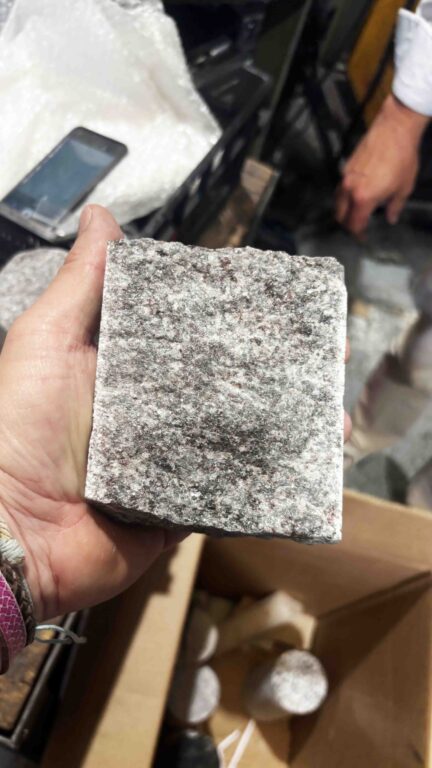
Towards new sample preparation technologies
Although dry cutting provides an effective solution in many situations, it is not always the only answer to sample preservation challenges.
With this objective in mind, Geofactory developed its Soft Core Splitter, a solution specifically designed for soft formations and poorly consolidated materials. Unlike traditional core cutting methods, this technology allows certain cores to be split without the use of a diamond blade.
The objective is to minimize mechanical disturbance while preserving the internal structure, texture, and natural characteristics of the sample. This approach is particularly valuable for unconsolidated sediments, fragile formations, and samples intended for analyses requiring maximum preservation of rock integrity.
Building upon this development, Geofactory is currently working on a Hard Core Splitter project intended for stronger and more competent geological formations. The objective is to provide a new alternative to conventional rock sample preparation methods while reducing the need for cutting fluids whenever possible.
This project reflects the continuous evolution of requirements within the geological sampling industry. Analytical programs are becoming increasingly sophisticated, laboratory workflows more specialized, and sample preservation requirements more demanding.
In this context, innovation is not limited to improving existing equipment. It also involves developing new preparation methods capable of preserving sample integrity throughout the entire analytical workflow.
Because for certain geological formations, the quality of an analysis ultimately depends on the ability to preserve the sample in a condition as close as possible to its original state at the time of collection.