Designing equipment by first Understanding the rock
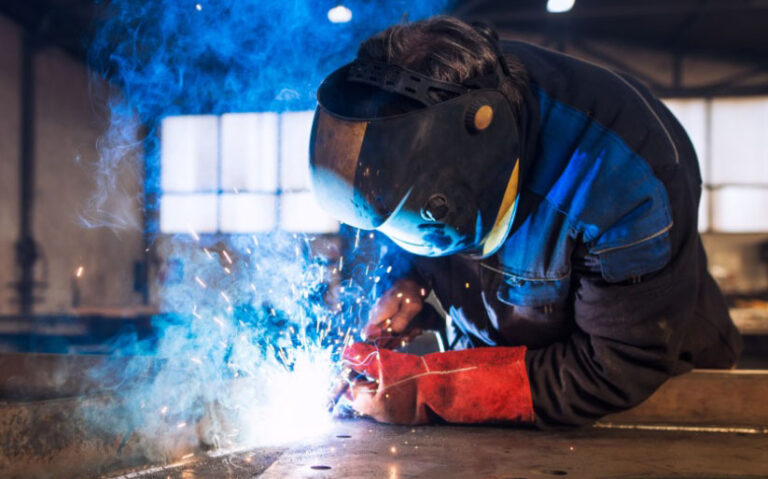
Industrial equipment is often designed by starting with mechanical specifications. At Geofactory, our approach is fundamentally different. Before designing a machine, we begin by understanding the rock itself, its geological environment, and the analyses it will undergo. Industrial design therefore becomes the result of geology—not the starting point.
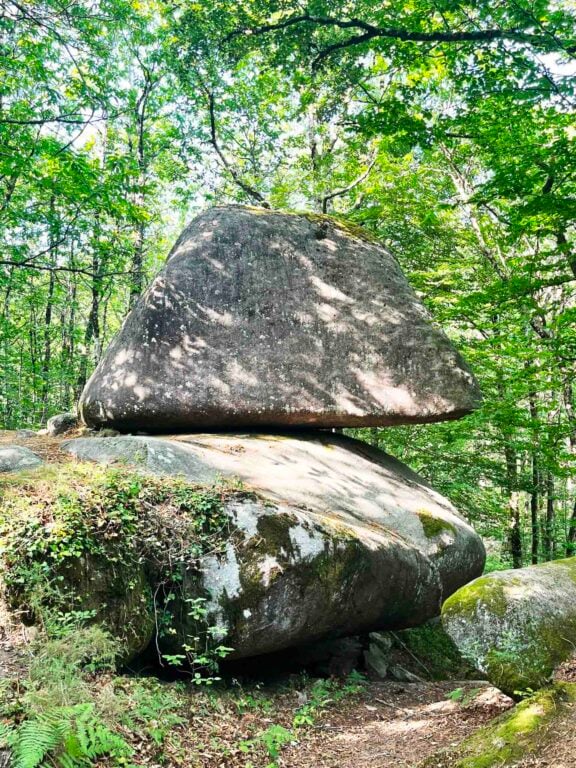
Every geological sampling project presents its own technical challenges. The nature of the geological formation directly influences the design of the equipment, the selection of materials, and the rock sample preparation workflow. A machine developed for cutting granite cores does not face the same requirements as equipment intended for evaporite formations or highly anisotropic shales.
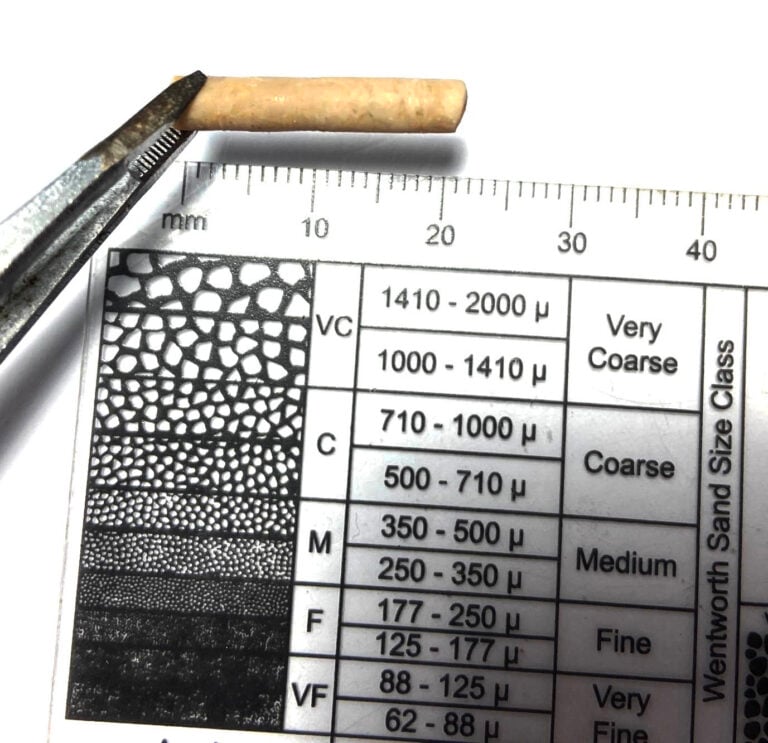
Evaporite formations such as halite, anhydrite, and polyhalite require specific approaches because of their sensitivity to moisture and their particular mechanical properties. Sedimentary rocks, including sandstone, limestone, and shale, exhibit significant variations in porosity, cementation, and structural behavior. Igneous and metamorphic rocks such as granite, gabbro, and gneiss present entirely different challenges due to their high hardness, abrasiveness, and mechanical strength. Beyond their geological origin, each rock possesses its own mineral composition, hardness, abrasiveness, compressive strength, thermal conductivity, porosity, and resistance to mechanical stress. These characteristics directly influence geological sampling, core cutting, and rock sample preparation operations.
At Geofactory, these geological properties define the starting point of every development project. Understanding the rock allows us to engineer equipment capable of preserving sample integrity while meeting the demanding requirements of petrophysical laboratories, research institutes, mining companies, oil & gas operators, geothermal projects, carbon capture and storage (CCS) programs, and oceanographic research involving marine sediment cores.
Transforming geological challenges into mechanical solutions
Once the geological constraints have been fully understood, they are translated into mechanical solutions by our engineering department.
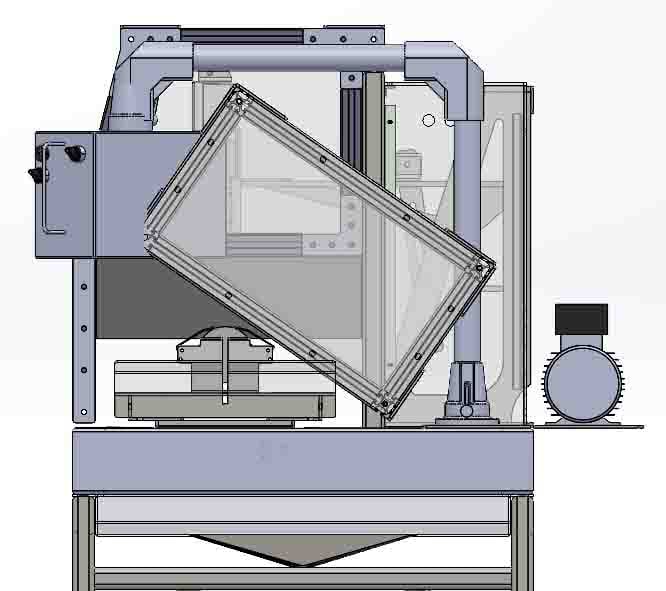
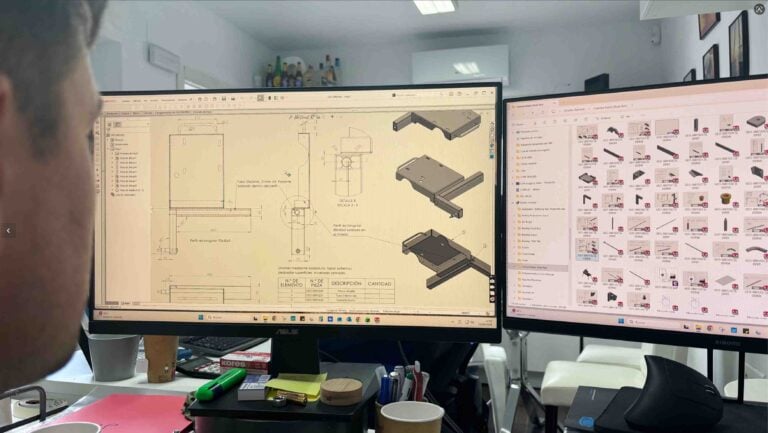
All Geofactory equipment is designed using SOLIDWORKS, allowing every component to be modeled in three dimensions, assemblies to be validated, mechanisms to be optimized, and manufacturing processes to be prepared before the first prototype is built.
Some projects require even more advanced engineering validation. Whenever applications involve high mechanical loads or demanding operational conditions, Geofactory collaborates with specialized engineering companies to perform structural calculations, finite element analysis (FEA), stress simulations, load calculations, and deformation studies. These engineering simulations allow us to predict the behavior of our equipment before manufacturing begins, ensuring optimal rigidity, stability, precision, and long-term reliability.
This engineering approach is particularly important for geological sampling equipment, where vibration control, cutting forces, and structural rigidity have a direct impact on sample quality. Developing a machine is therefore not simply about building a robust structure. It is about achieving the highest level of precision during core cutting, maintaining sample integrity, improving operator safety, and ensuring repeatable laboratory results.
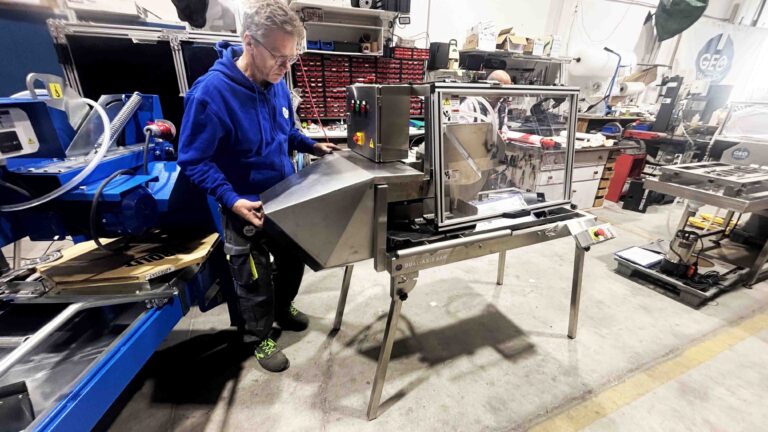
Every new development is subsequently validated through extensive testing performed in our workshop on a wide variety of geological formations. These practical trials allow our engineers to optimize cutting parameters, evaluate diamond tooling, validate machine performance, and continuously improve our equipment before commercial release.
Engineering that continues beyond the workshop
At Geofactory, product development does not end once a machine leaves our factory. Continuous collaboration with geologists, laboratory technicians, drilling contractors, and field operators plays a central role in the ongoing evolution of our geological sampling solutions.
One of the tools supporting this collaboration is our YouTube channel, which has become far more than a marketing platform. It serves as a technical communication resource where we share geological sampling demonstrations, core cutting procedures, rock sample preparation methods, equipment operation, maintenance guidance, and application-specific technical advice.
We also make extensive use of private video links to communicate directly with customers worldwide. Whenever an online meeting cannot be organized, or when a technical explanation is easier to demonstrate visually, our engineers prepare personalized videos showing specific procedures, equipment configurations, troubleshooting solutions, or cutting demonstrations.
In many cases, customers send their own geological samples to Geofactory so that our engineers can perform live cutting demonstrations on their actual lithology. This allows clients to observe how their geological formation behaves during rock sample preparation, validate the proposed workflow, and confirm equipment performance before making an investment.
This close collaboration between our engineering department, production workshop, laboratories, and customers has become one of the defining characteristics of Geofactory.
For us, industrial design is not simply about building high-performance machines. It is about transforming geological challenges into reliable mechanical solutions. Every piece of equipment we develop is the result of combining geological expertise, mechanical engineering, digital simulation, practical testing on real lithologies, and continuous feedback from the field. This integrated approach enables Geofactory to deliver geological sampling solutions for mining, oil & gas, geothermal energy, carbon capture and storage (CCS), oceanographic research, geotechnical engineering, and laboratory applications while meeting the technical requirements of the industry’s most demanding projects.